Press Release · NASA
Curiosity Blog, Sols 5056-5062: Charging Back Up!
Distributed by Endless Tech · Originally issued via NASA

- Curiosity Home
- Science
- News and Features
- Multimedia
- Mars Missions
- Mars Home
3 min read
Curiosity Blog, Sols 5056-5062: Charging Back Up!By Remington Free, Operations Systems Engineer, NASA-JPL
Earth planning date: Friday, Oct. 30, 2026
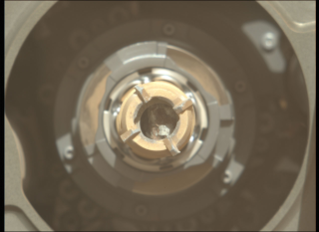
Today’s plan covered 3 sols, 5060, 5061, and 5062, as we take a few recharging sols before getting back to our normal drilling activities. As you may know if you have been following the blog closely, we are in the middle of a drilling campaign on our target called “Nazca.” We’ve already drilled the hole, characterized the tailings from the drill hole with ChemCam, and have now done several sample dropoffs, both to our SAM and CheMin instruments within the belly of the rover. We still have a number of activities left to do as part of the campaign, including another dropoff to SAM for a different kind of analysis, and drilling cleanup activities. One of those activities is called “RAGE” (Rotate to Agitate for Granule Expulsion, a very fun acronym) where we essentially shake the drill to get any remaining sample out of it. We’ll also make sure to take lots of imaging to continue document the drill hole and tailings.
In any case, those activities are very power-hungry for our rover! So today’s plan purposefully did not have a lot of activities in it so we could get a nice few power positive sols before we get back to drilling. Each of our three sols had a standard morning science block, with an extra exciting brand-new activity on 5061 (more on that shortly!).
Over the three sols, we conducted remote science with ChemCam active and Remote Micro-Imager mosaics on some interesting targets (“Titicaca,” “Pampas,” and “Salta”), some Mastcam imaging of our calibration target and our drill target, several Navcam dust devil studies and Mastcam tau observations, and twilight imaging. Despite this plan being recharging/waiting, we got in lots of exciting science to continue to study the Nazca crystal formations and the nearby layered rocks and bedrock.
On 5061, we also conducted a brand-new engineering activity to test parallelism over one of our downlink communications windows. As the rover gets older and our power output slowly decreases over the length of the mission, we are continuously looking for new ways to execute activities with less power use. One of our strategies is parallelism – having two activities execute at the same time will save power due to the rover being awake for less time. However, we need to vet pairs of activities ahead of time to ensure they are safe to run together. This is a test of one of those pairs – running our CheMin “Get Data” activity at the same time as we are sending data to one of our orbiters. CheMin Get Data is a high CPU activity which transfers science data from the instrument to our flight computers. The test seems to have gone well, but we’ll have to wait to hear back from our engineering team to analyze the results!
Overall, it was an exciting plan full of great remote science as we wait to be able to wrap up our drill campaign. Stay tuned to hear more about how the rest of the Nazca campaign went!
-
Want to read more posts from the Curiosity team?
-
Want to learn more about Curiosity’s science instruments?
Share
Details
Last Updated Nov 09, 2026Related Terms
Explore More
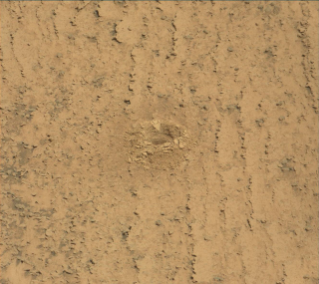
Curiosity Blog, Sols 5050-5055: It’s Nazca, Our 49th Drill Hole
Article
34 minutes ago
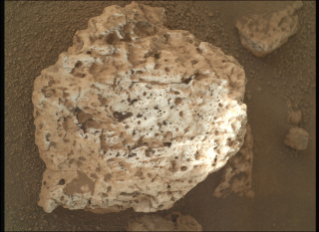
Rubies on Mars?
Article
3 hours ago
Newest Sample, Oldest Rock?
Article
3 hours ago Keep Exploring
Discover More Topics From NASA
Mars
Mars is the fourth planet from the Sun, and the seventh largest. It’s the only planet we know of inhabited…
All Mars Resources
Explore this collection of Mars images, videos, resources, PDFs, and toolkits. Discover valuable content designed to inform, educate, and inspire,…
Rover Basics
Each robotic explorer sent to the Red Planet has its own unique capabilities driven by science. Many attributes of a…
Mars Exploration: Science Goals
The key to understanding the past, present or future potential for life on Mars can be found in NASA’s four…